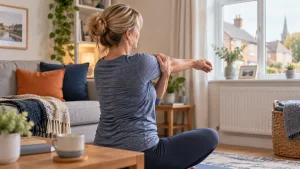
Many of us experience tight shoulders, a stiff neck or an aching lower back, especially if work or long hours of sitting are part of daily life. Hands-on treatment in clinic is the most effective way to release deeper tension, but there is also a lot you can do at home to stay comfortable between appointments.
These simple techniques are safe, practical and require no specialist equipment. They are the same home care recommendations often shared with patients who are treated here at Tim Wood Healthcare, supporting better movement and reduced discomfort in everyday life.
Understanding When Self-Massage Helps
Self-massage works best for mild, manageable tightness. It improves circulation, reduces muscle guarding and encourages the body to relax. It is not a replacement for professional treatment when pain is severe, persistent or linked to an injury, but it can be a useful tool for maintaining comfort between sessions.
Neck and Shoulder Release
Neck tension is one of the most common complaints. A few simple techniques can make a real difference.
Upper Shoulder Pressure
Place your fingertips on the top of your shoulder. Apply steady pressure into any tender or tight spots and hold for ten to fifteen seconds. Keep your breathing slow and relaxed. This helps trigger the muscle to soften.
Gentle Neck Sweep
Start behind the ear and glide your fingertips downwards towards the top of the shoulder. The movement should be slow and light rather than forceful. This supports lymphatic drainage and helps the muscles relax without irritation.
Upper Back and Shoulder Blade Tension
Many individuals feel tight between the shoulder blades, often due to desk work or long periods of driving.
Hand-Over-Shoulder Reach
Place your right hand over your left shoulder and reach towards the spine. Small circular movements over the muscles beside the shoulder blade can ease soreness. Swap sides and repeat.
Wall Ball Release
A tennis ball or massage ball works well for this area. Stand against a wall with the ball placed between your shoulder blade and the spine. Gently lean your weight into it and make slow movements up, down or side to side. Keep the pressure at a level that feels helpful, not sharp.
Lower Back and Hips
Lower back discomfort can often be linked to tension in the surrounding muscles, particularly the glutes and hips.
Glute Press and Hold
Sit on a firm chair. Cross one ankle over the opposite knee. Using your thumb or fingertips, apply light pressure to the outer hip and glute area, holding on any points of tension. This can help ease the pull on the lower back.
Pelvic Sweep
Place your hand on the top of the pelvis at the side. Sweep your hand downwards towards the hip. This helps reduce general tightness and encourages the lower back to move more freely.
Forearms and Hands
People who type, lift or use their hands repetitively often find this area becomes tight.
Forearm Strip
Rest your forearm on your thigh. Use your opposite thumb and glide from the wrist towards the elbow in a slow, steady line. Repeat several times. This can help ease tired forearm muscles and improve comfort around the wrist.
Simple Rules for Safe Self-Massage
A few guidelines will help ensure these techniques remain effective and safe.
Keep the pressure comfortable. If you need to tense up to tolerate it, reduce the pressure.
- Move slowly. Quick or forceful movements can irritate tissues.
- Avoid areas that feel sharp, numb or noticeably swollen.
- Stop if symptoms worsen or spread.
Self-massage should feel soothing, not painful, and the effects should be mild but noticeable within a few minutes.
Making It a Habit
Short, regular sessions tend to work better than long, occasional ones. Even five minutes at the end of the day can help maintain comfort. Combining these techniques with gentle stretches, adequate hydration and regular movement breaks will support longer-lasting results.
Need More Personalised Advice?
If you are experiencing ongoing discomfort or would like support tailored to your situation, Tim Wood Healthcare offers osteopathy and massage therapy to help with a wide range of musculoskeletal issues. Booking an assessment can provide clarity on the cause of your symptoms and the most effective treatment plan for you. Contact the clinic or book your appointment easily online now.